

Is the Mailbox Half Empty or Half Full?
For NPF week, the real question is not whether mail still works. It is whether the mailbox still works for consumers.

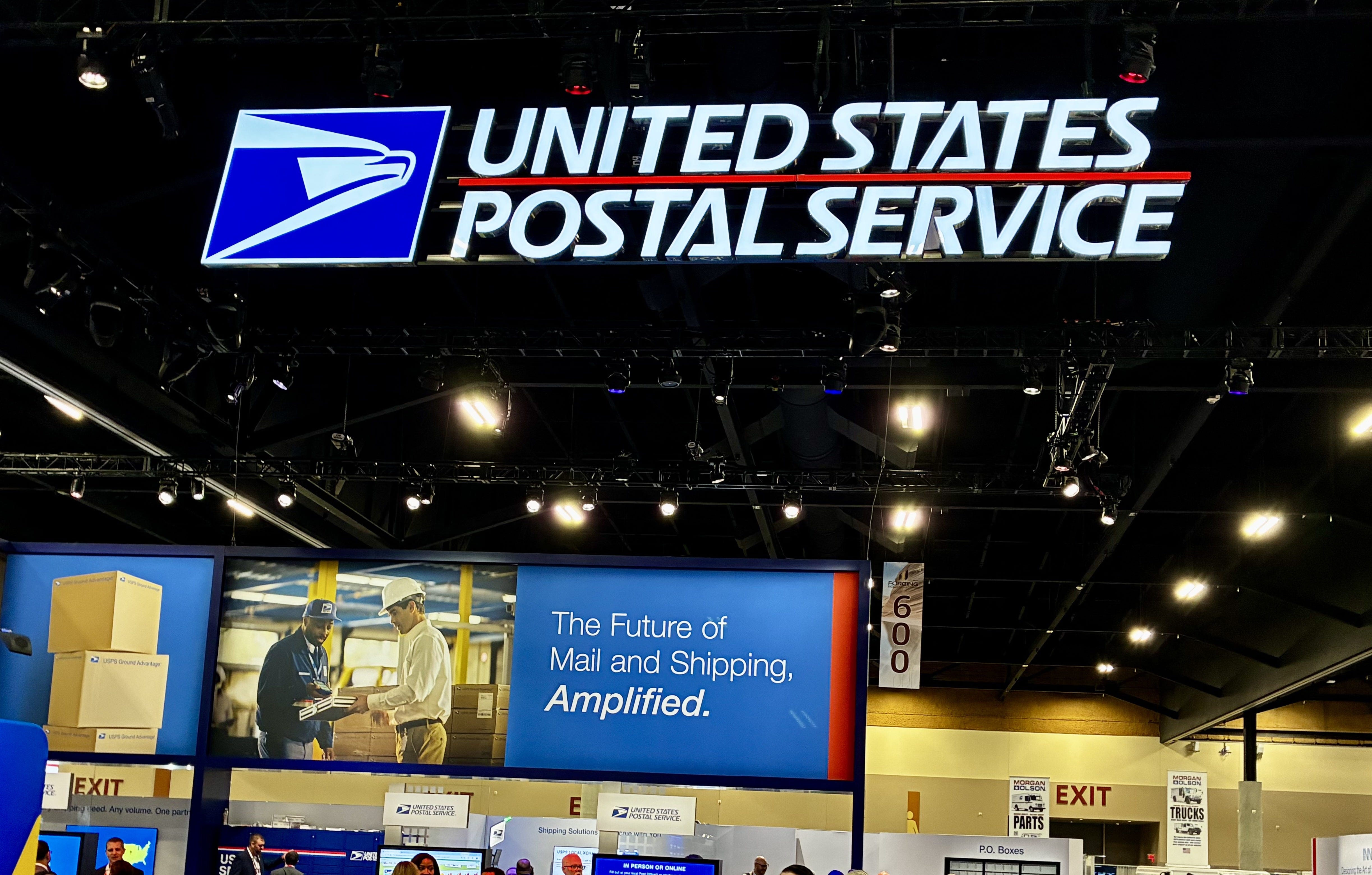
As the mailing industry gathers in Phoenix for the National Postal Forum this week, the question is not simply whether consumers value the mail. The question is what they think about what they find when they go to their mailbox.
In a new TreelinePress snapshot survey titled “The Mailbox Experience” data points to a perspective mailing industry should take seriously. Consumers are not asking for the mailbox to disappear. They are asking for a their mailbox experience to matter. One with less unwanted volume, clearer identification, more relevance, and more control.
That is the part of the conversation the industry needs to have, not just the tension between physical mail and digital delivery, but what consumers actually value in the mail they receive.
This Data Is Not New
This is not the first time TreelinePress has tested consumer attitudes about the mailbox. Several questions in this new survey were either replicated from or closely aligned with last year’s TreelinePress research on direct mail advertising, digital fatigue, and the U.S. mailbox experience. While the sample size is small, N=250 balanced by census data, with a margin of error of +/- 6.5%, the results are consistent and point in a similar direction.
In the 2025 TreelinePress Direct Mail Advertising survey, a clear majority of respondents said the amount of unsolicited advertising mail they received was too much. In the new survey, the pattern remained consistent, with two-thirds of respondents saying the overall amount of advertising or promotional mail they receive is either far too much or somewhat too much.
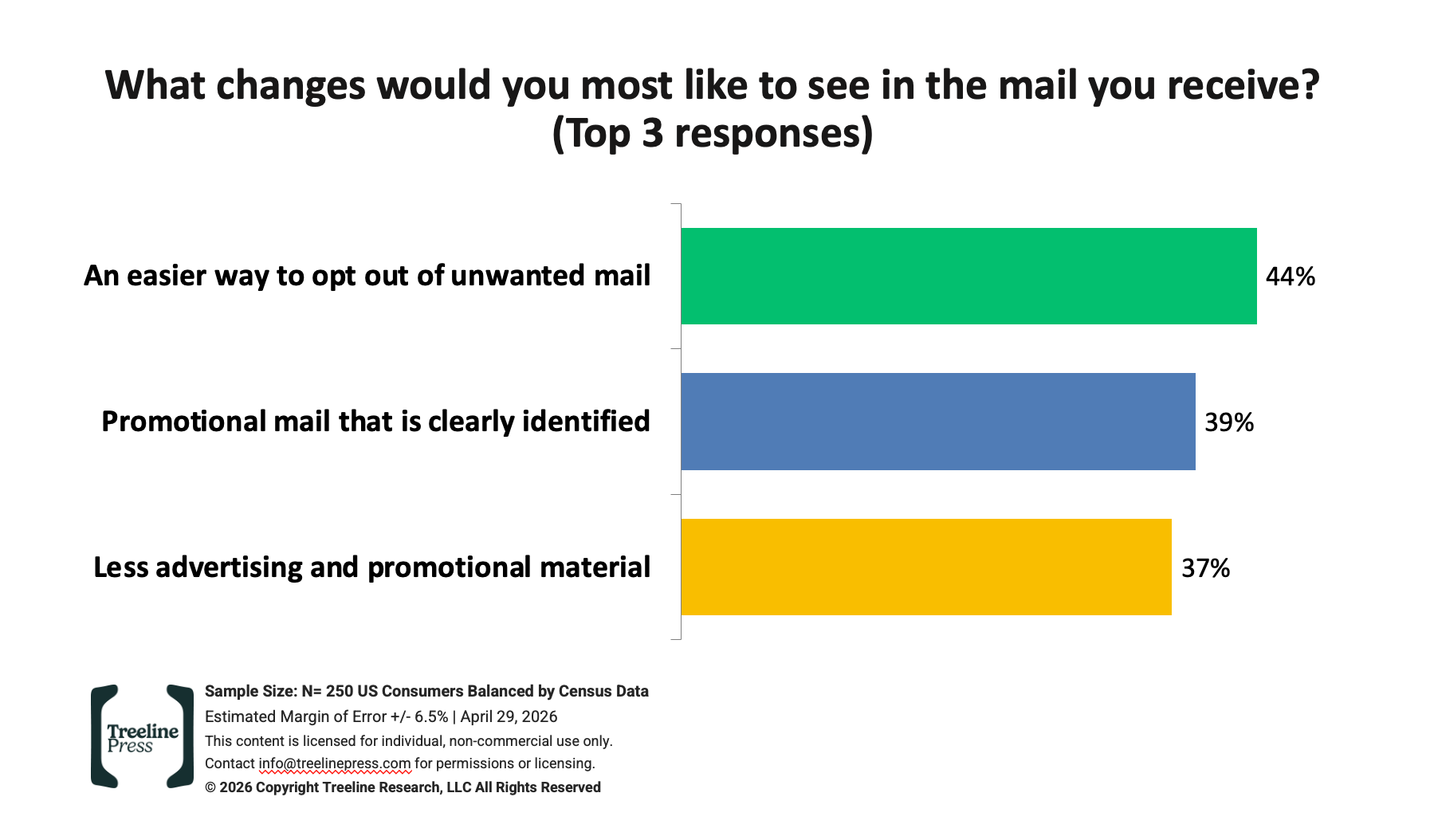
The control issue also carried forward. In the 2025 survey, a majority of respondents said gaining greater control over unsolicited advertising mail was important. In the new survey, the top requested change was an easier way to opt out of unwanted mail, selected by 44% of respondents, and another one-third wanted more control over which companies or organizations can send them mail.
This should not be dismissed as a narrow complaint about too much “junk mail.” Across multiple surveys, consumers are making a more specific point. They want less unwanted volume, more relevance, clearer identification, and more control.
Direct Mailers and Recipients Both Want Value
Direct mailers and mail recipients are not necessarily asking for different things. Both want value, but they define it from opposite sides of the mailbox.
For the mailer, value may mean response rates, sales conversion, donations, customer acquisition, retention, and measurable return on investment.
For the recipient, value means something very different. It means relevance, usefulness, timing, trust, clarity, and some sense that the mail was worth the effort to even collect from the mailbox in the first place.
The problem begins when the sender’s value is created by shifting clutter, sorting effort, and waste onto the recipient. A campaign can “work” for the mailer while still degrading the consumer’s experience when they collect items from their mailbox.
That is the issue the industry should be willing to discuss at NPF. A sustainable postal system is not simply about defending mail volume. It is about closing the gap between sender value and recipient value.
Disposal Is Not Engagement
Direct mail has always had a powerful advantage. It arrives. It is physical. It must be handled. It is difficult to ignore completely. Like it or not, you need to take action, and for much of the mailing industry, simply putting a logo on the outside of an envelope that is never opened and is immediately disposed of can still be considered worthwhile.
But handling a mail piece is not the same as valuing it. When respondents were asked what they typically do with advertising or promotional mail they did not request, the most common answer was briefly look at it, then throw it away or recycle it, selected by 49%. Another 35% said they bring it inside, then throw it away or recycle it without reading it, and 32% said they throw it away or recycle it before bringing it inside.
Because respondents could select more than one answer, these findings should not be read as mutually exclusive behaviors. But the pattern is clear. Disposal behaviors rank above reading, keeping, or setting mail aside for later.
Direct mail can still perform, especially when it is relevant, timely, targeted, well-designed, and connected to a broader customer journey. But the industry should be careful about equating delivery with engagement.
For many outside the print, mail and postal industry, our mailboxes have become a dumping ground for things we didn’t ask to receive.
Just because something arrived in the mailbox does not mean it created value for the recipient. Being sorted for importance and disposed of is not the same as being wanted. Glancing at a brand logo for half a second is not the same as finding something useful, and consumers know the difference.
The Sorting Burden Is Direct Mail Fatigue
The physical mailbox still carries a level of importance because consumers know something meaningful may arrive there. That is part of mail’s strength, but it is also part of the problem, a fact that the direct mail industry takes advantage of every day.
In the new survey, 59% of respondents said they sort through all of their mail every time primarily to ensure they did not miss something important. Another 20% said they do this often. Combined, nearly 80% of respondents routinely sort through their mail to avoid missing something important.
They are looking for the bill hidden between promotions. They are making sure a check was not missed. They are scanning for something that looks official, urgent, personal, or financially important.
This is one reason promotional mail benefits from the mailbox’s association with important communications. Critical communications are expected; promotional mail needs to earn its significance.
When too much promotional mail is designed to borrow the visual language of urgency or importance from expected mail, it can make the entire mailbox experience feel less trustworthy. That does not help the channel over time.
Consumers are not simply browsing what arrived in the mail. They are performing a defensive sorting task, forced on them by a mailing industry that too often uses trickery and deception to get consumers to open something “just in case.” This erodes trust in what arrives in the mail, and it helps explain why nearly 50% no longer check their mail daily, and 23% check their mailbox once a week or less.
What This Means for NPF
National Postal Forum is where the mailing industry talks about performance, innovation, operations, technology, delivery, growth, and the future of the postal ecosystem.
But the industry should also ask a more basic question: what does the mailbox experience feel like from the consumer’s side? For those outside of the industry?
If too much of what arrives feels unwanted, irrelevant, or difficult to control, then the industry has work to do. Consumers want choice, and in other parts of the world, they have been given that choice. In some markets, direct mail has been eliminated altogether. The U.S. mail industry has a chance to adjust now, before regulators or political pressure force a change.
The best future for mail is not going to be built by defending every piece of volume equally. It will be built by making the mailbox feel more intentional, more trusted, and more useful.
That does not mean less mail for the sake of less mail. It means better mail that creates value on both sides of the mailbox.
Andy’s Take
The mailing industry should not be afraid of this conversation. Consumers are not saying the mailbox no longer matters. They are saying the experience needs to improve.
If the industry treats every piece of volume as equally valuable, it risks weakening the very channel it wants to defend. But if it focuses on relevance, transparency, trust, and control, mail has a stronger argument for the future.
The next era of mail will not be won by reach alone. It will be won by value, and value has to be measured on both sides of the mailbox.
Full research of The Mailbox Experience will be published soon on TreelinePress and available to paying subscribers.
For more, watch my TEDx talk on the future of the U.S. Mail, and be sure the read the comments on YouTube.
I just arrived at NPF and walked the exhibit floor and the first thought that came to mind was, I need a drink. Not my go to by any means, but wow. Feels like GraphExpo 6-8 years ago.