

The Future Still Needs a Point of View
After a week at NPF and one year on Substack, Hanny’s reminded me that transformation is creative before it is operational.

This is a little outside the lines of what I normally write about at TreelinePress. But maybe that is the point.
I came to Phoenix this week for the National Postal Forum expecting to think about mail, digital transformation, customer communications, and the future of an industry still trying to understand what it is becoming. Those are familiar themes for me. They are the terrain I have spent the past year exploring on Substack, trying to make sense of how legacy industries change, how behavior shifts, and how old systems either adapt or defend themselves.
I did not expect to find a family story waiting for me a couple of blocks from the convention center.
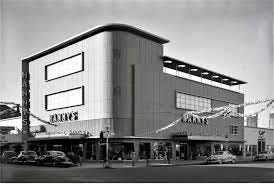
Just down the street is Hanny’s, a downtown Phoenix restaurant located in a historic building that once housed Hanny’s Department Store. On the surface, Hanny’s is a restaurant, bar, club, and scene all at once. But for me, walking into it felt like something else entirely.
It reminded me immediately of my wife’s uncle, Karl Kopp.
In Milwaukee, the Kopp name means frozen custard. Karl’s mother, and my wife’s grandmother, Elsa Kopp, opened her first frozen custard stand in Milwaukee in 1950 and built something that became part of the city’s identity.
For people from Milwaukee, Kopp’s is a cultural reference point, not just because of the food, but because of the feeling of the place. The architecture, the flavors, the scale, and the sense that you were stepping into something unmistakably Milwaukee. Something unforgettable.
Kopp’s also became known for something that now feels inseparable from the Wisconsin frozen custard experience: the flavor of the day. You did not just go to Kopp’s for custard. You checked the flavor, which was published in advance.
There are cultural echoes too. If you know Milwaukee, you understand why a custard stand referenced in a movie like Song Sung Blue, or the drive-in world of Arnold’s on Happy Days, immediately brings certain places to mind. They speak to a Milwaukee where burgers, custard, drive-ins, neon, cars, family, and city memory all belonged to the same story.
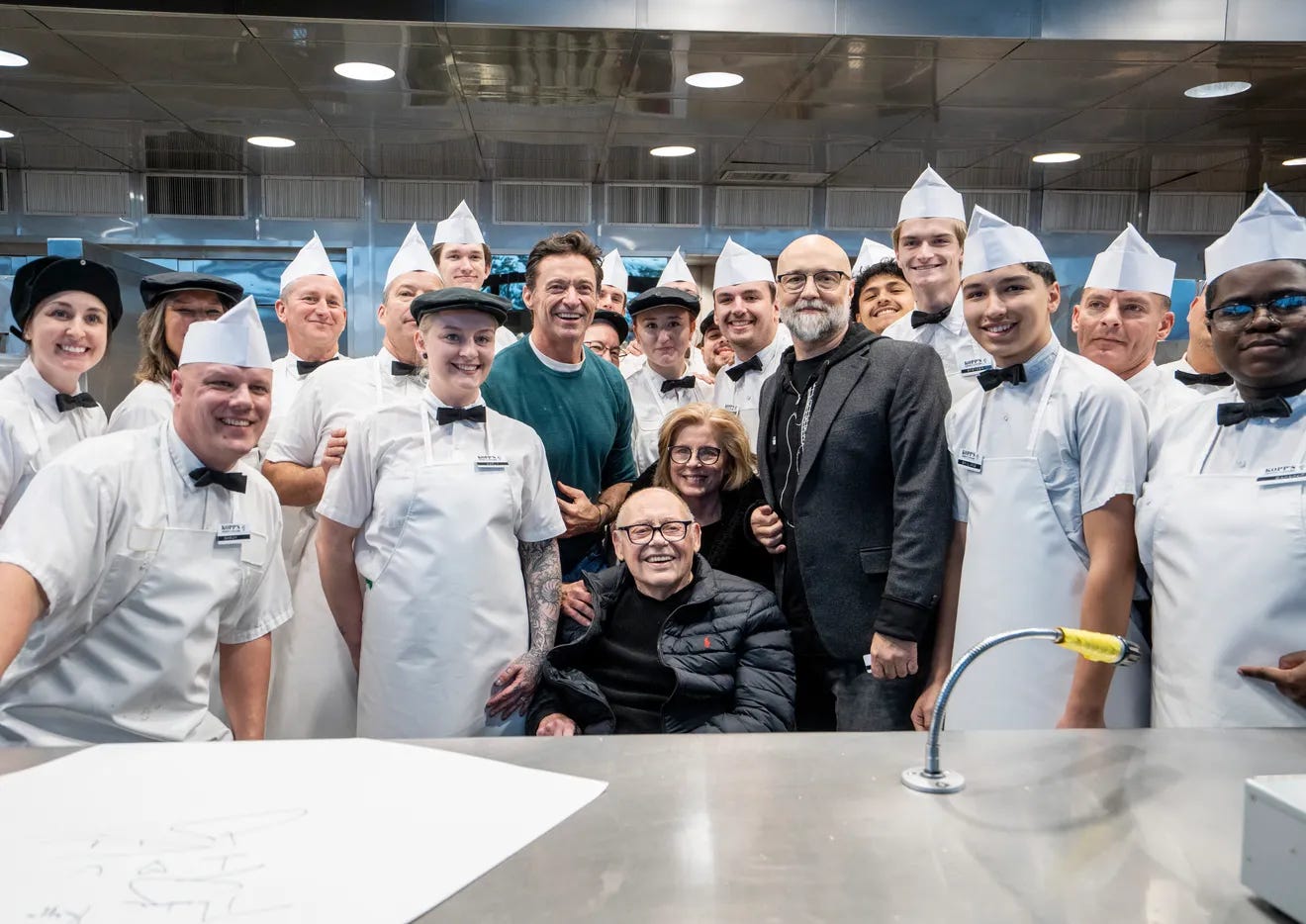
Beyond the flavor of the day
But Karl’s work reached well beyond frozen custard. From Milwaukee to New York to Phoenix, he made his mark in a unique way.
He created restaurants with a very particular sense of architecture, style, and experience. In addition to Kopp’s Frozen Custard and Hanny’s, there was Elsa’s on the Park in Milwaukee, AZ88 in Scottsdale, and Bar 89 in New York. His work was never just about what was served. It was about how a place made you feel. It was memory, taste, identity, and attitude all wrapped together.
Architecturally, Karl’s style was distinct. He was willing to use features that were unfamiliar in the best possible way. Bar 89 made the pages of Architectural Digest and featured one of the first unisex bathrooms in New York with transparent glass doors on the stalls. They blocked out when locked, but it caused quite a stir at the time.
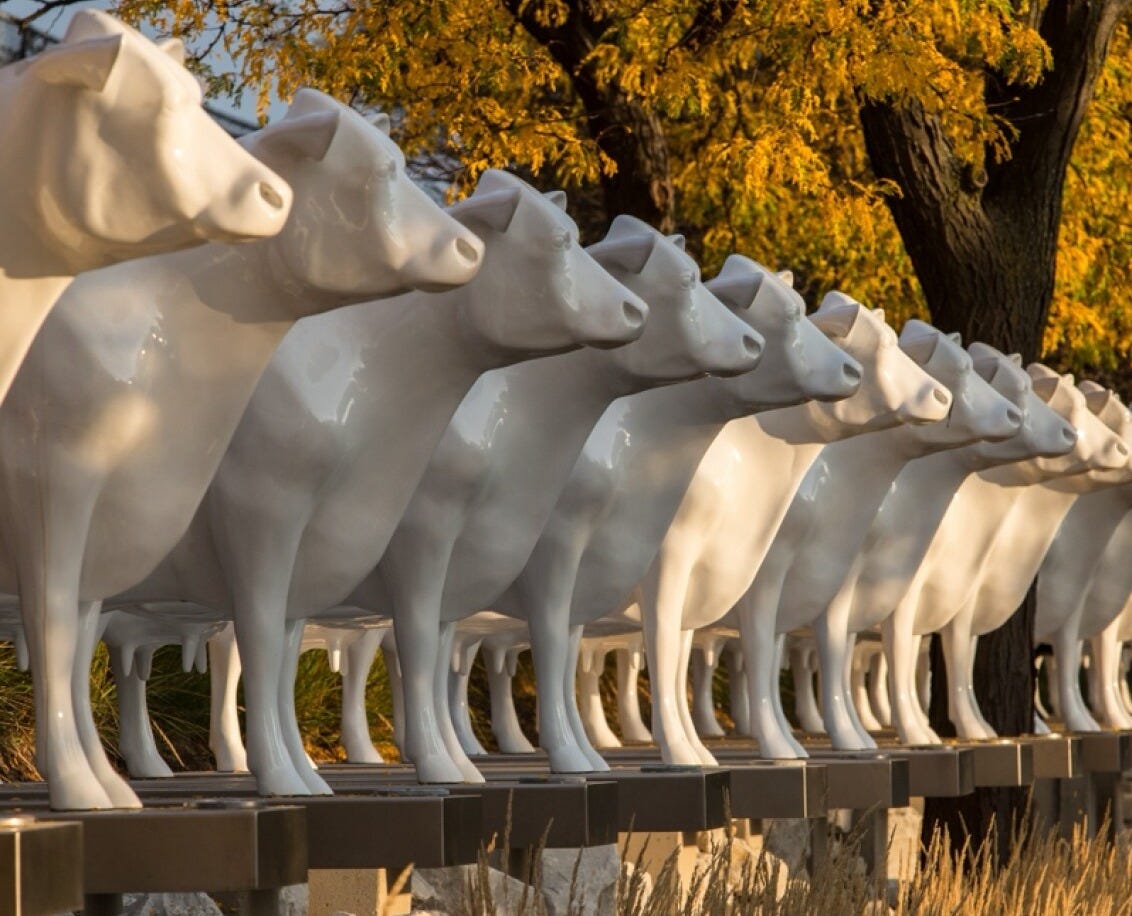
His restaurants had hard lines, unusual details, and a strong European sensibility, influenced in part by the German aesthetic of his family’s roots and the time he spent there as an adult. If you have ever been to AZ88 in Scottsdale, you know exactly what I mean. The hundreds of eyeballs staring at you from behind the bar are not there by accident. They are part of the point.
And nothing stood still for long. The interiors, artwork, lighting, and installations were always evolving. They were never dull, and often made the news. Christmas was its own kind of event, with holiday trees reimagined in ways that only Karl would think to do. They were not decorations as much as statements.
That was the point. Karl did not just build places to eat. He built places with a point of view. He understood that a restaurant could be more than food, service, and tables. It could be a room with a personality, a place that made people react, remember, argue, laugh, and come back just to see what had changed.
That is what I admire most.
I am trying to do something similar with words, conversations, and insight, describing a world of digital transformation through the lens of communications, behaviors, and the flow of investment dollars rather than food, style, and architecture. One of Karl’s nieces once said to me, “You are a lot like Karl.” I did not know Karl well, but I understood what that meant, and I will take it as a compliment.
Because Karl was not trying to fit in. He had a way of seeing the world that was not borrowed from anyone else. His restaurants did not feel like they came from a committee. They felt like they came from a person. A person with a heart, a point of view, and a lifetime of lived experience.
That kind of originality is rare.
It is, in a word, art.
The Kopp legacy lives on
The first time I met my wife’s extended family was at Elsa’s on the Park in Milwaukee. She wanted me to have the right outfit, the right look, and the right sense of the room. I still remember walking into that place and realizing almost immediately that it was not just dinner. It was a world.
And I am grateful to have been a small part of it.
Our daughter carries her great-grandmother’s name, Elsa, as much for the person as for the place and what both have meant to our family. It is a name tied to food, memory, style, independence, and a willingness to build something that feels unmistakably original. I am proud to say she is living up to that reputation, building her own life with her husband, Justin, in Denver.
Elsa’s on the Park continues as a popular hangout spot for many of Milwaukee’s notable and famous. For years, we celebrated our family Thanksgivings there, which in retrospect seems almost crazy. My kids were old enough to stand behind the bar and serve us drinks. Those memories are etched in my mind as much as the architecture and sense of uniqueness.
Two days ago, I walked into Hanny’s in downtown Phoenix thinking about mail, AI, and the future of an industry, and found myself thinking instead about family, names, legacy, and the strange ways certain places stay with us. Sometimes a restaurant is not just a restaurant. Sometimes it is a reminder of where a story started, how it was carried forward, and who gets to carry it next.
That is what hit me at Hanny’s. I do not know another way to describe it.
It felt very much like Karl Kopp, because it is.
That may be why this evening, after a day at the National Postal Forum, landed with me the way it did and why I had to write it down while the feeling was still fresh.
I spent the last week studying the future of an industry struggling with its own identity. The conversations were about mail, data, postage, delivery, labor, automation, AI, digital communications, customer expectations, and the pressure to change. Those are real issues. They matter, and they are important to all of us.
But walking into Hanny’s reminded me that transformation is not only operational. It is also creative, and creativity often has to exist within a unique set of rules.
Creativity from inside the guardrails
Even on my own side of the family, there is a connection to food and the restaurant business, but from a very different point of view. My cousin is married to Jacques Sorci, a Master French chef who built his career inside the exclusive worlds of The New York Palace, The Carlyle Hotel, and Ritz-Carlton hotels worldwide. He also served as executive chef at the Rainbow Room in New York.
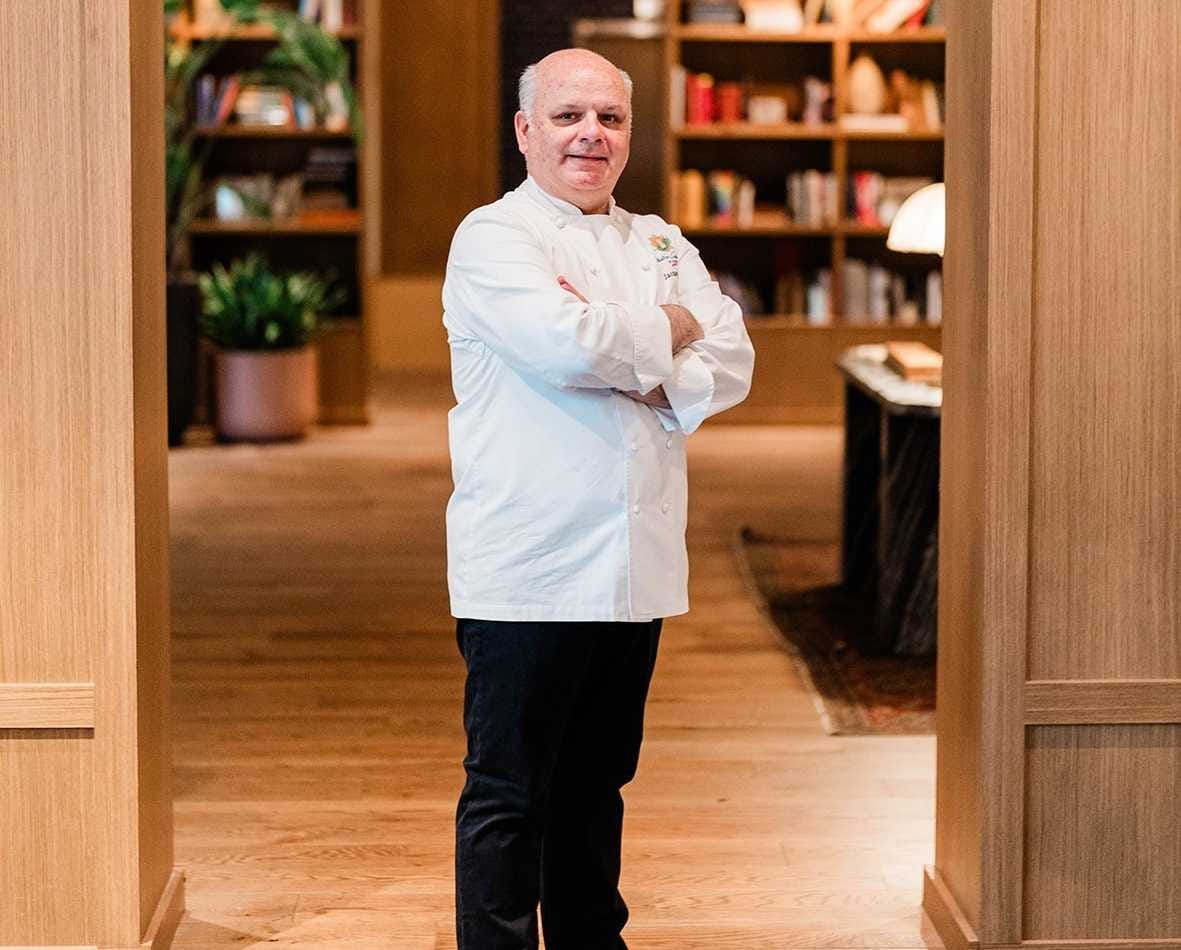
That is a different kind of creative discipline. Karl’s work was more architectural and provocative. Jacques’ world was built around precision, tradition, and restraint. Like compliance and regulation in the industries I cover, there is only so far you can push and still remain within the realm of French cooking. But Jacques found ways to do it. He found room for originality inside structure, standards, and expectation.
And not just in his cooking. In his presentation, in his presence, and in his own unique way of connecting with people, Jacques made the experience feel personal. He has a way of making everyone he meets feel special, which may be one of the highest forms of hospitality.
That is not all that different from operating inside regulated industries. You can stand out. You can be different. You can create something distinct. But it takes effort, judgment, and a willingness to step outside the obvious lines without losing the integrity of the work.
Every industry reaches a point where efficiency is no longer enough. Doing the same thing faster is not transformation. Producing more output with fewer people is not the same as having an original point of view. Automation may change the economics of the output, but it does not automatically create meaning, distinction, or value people remember.
That is the opportunity in front of every industry, every business, and every entrepreneur, with or without AI.
To be different.
This to me is where the AI conversation often feels incomplete. It does not have a soul. It is not willing to experiment or risk failure. It cannot read the human heart. We are living through a moment when everyone is talking about AI, agents, workflows, automation, productivity, and being replaced by robots. But places like Hanny’s, Kopp’s, and even the Rainbow Room remind me that the work people remember is rarely generic.
It has taste. It has judgment. It has a point of view.
And maybe that is what every industry eventually has to rediscover. The future is not created by repeating the past with better tools. It is created by people willing to take the memory of what came before and turn it into permission to do something different.
That is true in restaurants. It is true in communications. It is true in mail delivery. And it is true in the age of AI.
The future will not belong to the people who sound the same, look the same, and produce the same thing faster. It will belong to the people willing to stand for something, build something distinct, and create experiences that carry memory, style, and meaning.
Karl Kopp understood that. Jacques Sorci understood it too, though in a very different way. Karl pushed through architecture, attitude, and atmosphere. Jacques pushed through discipline, restraint, service, and the quiet confidence of a chef who knew exactly how far he could go without losing the integrity of the work.
That is the part of legacy I keep coming back to. It is not repetition. It is permission.
Permission to build something that feels like it came from somewhere specific, from someone specific, with a history behind it.
Permission to work inside the guardrails without becoming ordinary.
Permission to remain human in a world increasingly obsessed with automation, efficiency, and sameness.
That is what I found a few blocks from the Phoenix Convention Center.
Not just a restaurant.
A reminder.
It is okay to be human.